Musical Toys for Babies: A Buyer’s Guide by Age
25 December 2025

Walk into any toy aisle, or scroll any baby shop online, and musical toys are everywhere: rattles, drums, mini pianos, singing plush, light-up mats. It is easy to end up with a basket of things that beep. This guide is meant to make the choice simpler. It sorts musical toys by age, explains what to check before buying, and shares a few ideas for playing with sound together.
Whether you are setting up for your own little one or choosing a gift for a niece in Toronto or a friend’s baby in Dubai, the same principles apply.
Why babies love sound
From the very beginning, babies turn towards voices, rhythm and music. A musical toy taps into that natural curiosity. Shaking, pressing and banging something and hearing it answer back is simply fun. It also gives you and your baby something to share: you sing, they shake, you both laugh.
Musical toys are at their best as part of play together, not as background noise.
Musical toys by age
Newborn to 6 months: soft and simple
At this stage babies mostly watch, listen and feel. They can’t do much pressing on their own yet, so keep things soft, gentle and easy for you to use with them.
- Soft rattles light enough for tiny fingers to hold with a little help.
- Your voice. Honestly the favourite instrument at this age. Songs, rhymes, lullabies and chants all count.
- A gentle sound toy you play for them, such as a soft plush with a lullaby or mantra, used together during quiet time. (Safe-sleep tip: keep soft toys out of the cot or crib for babies under one.)
6 to 12 months: cause and effect
Babies are sitting up, reaching and discovering that what they do makes something happen. Toys that answer back are a hit.
- Simple drums and shakers. Babies love banging things; a drum turns that urge into rhythm.
- Musical play mats that play a sound when a panel is pressed or kicked.
- Sound books with sturdy pages and buttons to press for a song or a sound.
- Press-to-play plush that a baby can learn to activate with a squeeze, with your help at first.
12 months and up: making music
Once little ones are walking and starting to talk, play becomes more deliberate. They want to press, imitate and dance.
- Xylophones with a chunky mallet: simple, durable and genuinely musical.
- Mini keyboards with large keys.
- Toys they can activate themselves, such as a plush deity that chants when the tummy is pressed, or a press-to-play mantra book.
- Things to dance to. A favourite song and a parent who dances badly works brilliantly.
Traditional Indian sound toys
Many of us grew up with simple sound toys: the wooden pull-along drum that beats as it rolls, the little damru that rattles with a twist of the wrist, the temple bell rung during aarti. They are worth passing on, especially when children are growing up far from India. Our Damru Rattle and Pooja Aarti Bell are child-friendly takes on those classics.
| Toy type | Typical age | What children enjoy |
|---|---|---|
| Soft rattles | From the early months | Holding, shaking, gentle sound |
| Musical plush | All ages (check the label) | Cuddles, familiar songs or chants |
| Sound books | 6 months+ | Pressing buttons, pictures with sound |
| Drums and shakers | 6 months+ | Rhythm, cause and effect |
| Play mats | 6–12 months | Kicking, pressing, whole-body play |
| Xylophones and keyboards | 12 months+ | Making their own music |
How to choose
1. Safety first
- Look for recognised safety standards such as ASTM F963 (US) or EN-71 (UK and Europe).
- No small parts. A common rule of thumb: anything that fits through a toilet-roll tube is too small for children under three.
- Smooth edges on hard toys, tight stitching on soft ones.
- Screw-secured battery compartments, so curious fingers can’t open them.
2. Gentle volume
Louder is not better. Many electronic toys are surprisingly loud when held close to a little ear. Listen before you buy, prefer toys with a volume control or a soft default volume, and if a toy feels loud to you up close, it is too loud for your baby.
3. The right toy for the right stage
Buy for the age your child is now, not the age you are hoping for. Follow the age guidance on the label; it is there for good reasons.
4. A mix of active and quiet
Toys a child plays, such as drums, xylophones and keyboards, are wonderful for active play. Gentle sound toys, like a lullaby or mantra plush, suit quieter moments and the wind-down before naps. A good collection has a bit of both, plus plenty of time with no toy sound at all.
5. Built to last
Babies drop, throw, chew and sit on their toys. Choose solid construction and fabric that can be cleaned.
Common mistakes
- Too many beeping toys. A room full of flashing electronics can feel overwhelming. Fewer, simpler toys often get more love.
- Buying for the wrong age. A toy that is too advanced gets ignored; one that is too young gets bored of quickly.
- Skipping the label. Two minutes reading the age and safety information is time well spent.
- Leaving the toy to do the work. Musical toys shine when you play along.
Playing with sound together
- Follow their lead. Let your child explore the toy their way instead of showing the “right” way.
- Keep it short. Ten minutes of happy, shared play beats an hour of a toy running in the background.
- Join in. Clap, hum, sing a line, say the words of a chant. For families abroad, this is also a lovely, easy way to keep a home language or familiar prayers in daily life.
- Make it a ritual. The same song after the bath, the same chant before the last story: small routines that children come to look forward to.
Where Panda’s Box fits in
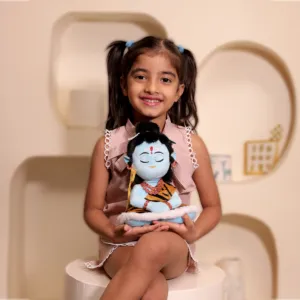
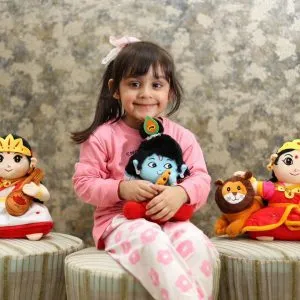
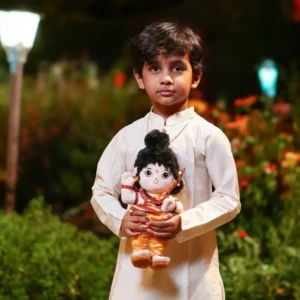
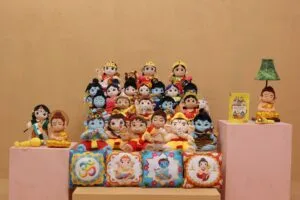
We make a small, focused range of sound toys for little ones aged 1–5, built around familiar devotional sounds. Our plush deities chant their own mantras when you press the tummy, in small (about 23 cm) and medium (about 28 cm) sizes, and My First Book of Mantras is a press-to-play sound book with 25 mantras and the complete Hanuman Chalisa, with a volume slider. Everything is certified to ASTM and EN-71 toy-safety standards and ships from India within 24 hours.
If you are weighing up a soft musical toy in particular, our guide to musical plush toys goes into the details. Or browse all our mantra chanting toys and books and games.
Frequently asked questions
Are musical toys suitable for newborns?
Simple, soft toys with a gentle sound can be enjoyed together from early on. Choose toys designed for your baby’s age, with no small parts and a soft volume, and keep soft toys out of the sleep space for babies under one.
Are electronic toys better than traditional ones?
Not necessarily. Simple traditional toys like drums, xylophones and rattles invite children to make the sound themselves. A balance of both, plus lots of singing together, works well for most families.
At what age can babies start playing with musical toys?
Babies respond to sound from birth, so gentle sounds and your own singing are lovely from day one. Hands-on musical toys become more fun from around six months, when babies can grab, shake and press.
What makes a good musical gift for a family abroad?
Something the family can’t easily find locally, with sounds that feel like home: a plush deity that chants familiar mantras, a mantra sound book, or a damru rattle or aarti bell for little ones to join in at puja time.