Sound-Making Toys for Babies: Safe, Gentle and Age-Appropriate
27 October 2025
Babies respond to sound much earlier than most parents expect. Long before they understand words, they turn towards a familiar voice, settle to soft music or watch curiously when a rattle shakes. That is one reason sound-making toys are such a popular choice in the first year.
But not every toy that makes noise is right for a baby. Plenty of toys are loud, flash with lights or play harsh, tinny tunes that can feel uncomfortable for an infant. More and more parents, wherever they live, are choosing softer sound experiences instead: plush toys with gentle audio, crinkle cloths and simple rattles, used in short, supervised play sessions.
Why babies are drawn to sound
- Sound often catches a baby’s attention before faces, words or objects do.
- Babies may quieten to a parent’s voice, settle to soft music or look around at a gentle rattle.
- Hearing the same sounds again and again helps babies recognise familiar moments in their day.
- Sound means more when it comes with eye contact, touch and a smile.
- Soft music can become part of calm routines around feeding, cuddles or bedtime.
- Most babies are happier with gentle, predictable sounds than sudden loud ones, and with short bursts rather than constant noise.
Sound-making toys vs noise-making toys
| Sound-making toys | Noise-making toys |
|---|---|
| Calm, gentle sound | Loud entertainment |
| Soft tunes or mild audio | Sharp or repetitive effects |
| Suited to supervised baby play | Can overwhelm young babies |
| Invite curiosity | Mostly distract |
| Often plush or cloth | Often hard plastic |
| Easy to fit into cuddle time | Can become tiring after repeated use |
| Short, calm sound cycles | Constant sound, often with flashing lights |
What makes a sound toy safe for babies?
1. Soft, controlled sound
Gentle lullabies, calm tones or a light rattle suit young babies far better than sirens or screeching animal noises, which are more likely to startle than delight. A softer toy also makes playtime more peaceful for you.
2. Baby-safe materials
Babies touch, hold and mouth everything. Look for soft fabrics, smooth surfaces and clear information about materials. Rough edges and poorly finished plastic are a warning sign. Recognised toy-safety standards such as ASTM F963 (USA) and EN-71 (Europe) are worth looking for on the label.
3. No small detachable parts
Avoid loose buttons, beads, ribbons and decorations. Check stitching and fixed parts, and inspect toys regularly for wear and tear. Simple designs are usually the safest.
4. The right toy for the age
Always check the recommended age before buying. Newborns need only simple sounds and light toys; complex electronic toys are rarely necessary in the early months.
5. A secure battery compartment
If a toy has batteries, the compartment should be firmly closed, ideally with a screw. Check it again after the toy has been well used.
6. Easy cleaning
Baby toys meet saliva, milk and everyday dust. Check the care instructions before you buy: toys with a sound box inside usually need surface cleaning rather than a full wash.
7. Short, simple sound patterns
Babies do not need endless music. Short melodies that stop on their own feel calmer and are easier to weave into soothing routines.
Types of sound-making toys to consider
- Soft plush toys with gentle audio: comforting to hold, less overwhelming than hard plastic toys, and a lovely newborn gift.
- Crinkle cloth toys: a soft, natural sound made by touch and movement. Light, easy to hold, and great for tummy time.
- Musical plush toys: soft lullabies or prayers for quiet moments, a gentle alternative to loud battery toys.
- Wrist or foot rattles: babies discover that moving makes a sound. Always use them under supervision.
- Soft teethers with a crinkle or rattle: comfort first, with a little sound for interest. Material quality matters especially here.
- Press-and-play toys: simple cause and effect, press and hear a sound. Choose soft buttons and avoid flashing lights.
Gentler alternatives to the classic rattle
| Instead of | Try | Why it may suit better |
|---|---|---|
| Loud plastic rattle | Soft crinkly cloth toy | Softer sound and texture-based play |
| Heavy, hard rattle | Plush sound toy | More comfortable for little hands |
| Flashing electronic toy | Gentle musical plush | Less overwhelming |
| Sharp-sounding shaker | Wrist rattle | Sound linked to the baby’s own movement |
| Repetitive battery toy | Press-and-play plush | Sound only when pressed |
| Hard teething rattle | Soft teether with crinkle | Comfort and sound together |
A rough guide by age
| Baby’s age | What babies often do | Sound toy to try | Your role |
|---|---|---|---|
| 0–3 months | Turn towards familiar sounds | Your voice, soft music | Calm, close, supervised moments |
| 3–6 months | Reach for and react to movement | Crinkle toys, wrist rattles | Encourage gentle exploring |
| 6–9 months | Hold and explore objects | Press-and-play toys | Guide safe play |
| 9–12 months | Enjoy simple cause and effect | Gentle musical toys | Play together, sing along |
Every baby grows at their own pace, so treat this as a loose guide rather than a checklist.
The sound test: a quick check before you buy
- Arm’s-length test: hold the toy at arm’s length and switch it on. If it feels too loud for you, it is too loud for a baby.
- The startle factor: if your baby jerks, cries or turns away, the sound is too sudden or sharp. Put that toy aside.
- Harshness, not just volume: metallic or mechanical sounds can grate even at moderate volume. Sound quality matters as much as loudness.
- Automatic stop: toys that play a short cycle and then stop are easier to manage than ones that run on and on.
- Watch a video: when buying online, a product video tells you far more about real sound and size than photos do.
Sound toys to avoid
- siren-like effects, screaming animal noises or harsh mechanical sounds
- flashing lights combined with fast music
- loose battery covers, heavy hard toys, or loose beads and bells
- rough, poorly finished plastic or a strong chemical smell
- music that cannot be stopped
- anything outside the recommended age range
Using sound toys without overwhelming your baby
- Keep play short. A few minutes of supervised sound play is plenty, with quiet breaks in between.
- One sound toy at a time. Several at once quickly becomes noise.
- Watch your baby. Turning away or fussing means “enough”; calm eye contact and curiosity mean they are enjoying it.
- Add your voice. Talking, smiling and singing along matter more than the toy. A sound toy should support bonding, not replace it.
- Protect quiet time. Babies need calm, low-noise stretches in the day too.
- Use sound as a routine cue. The same soft song or prayer at bedtime becomes a familiar, comforting signal.
A note on our musical plush
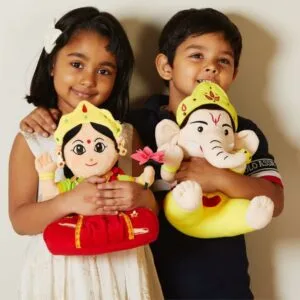
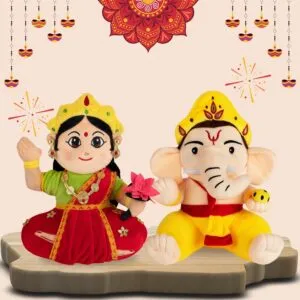
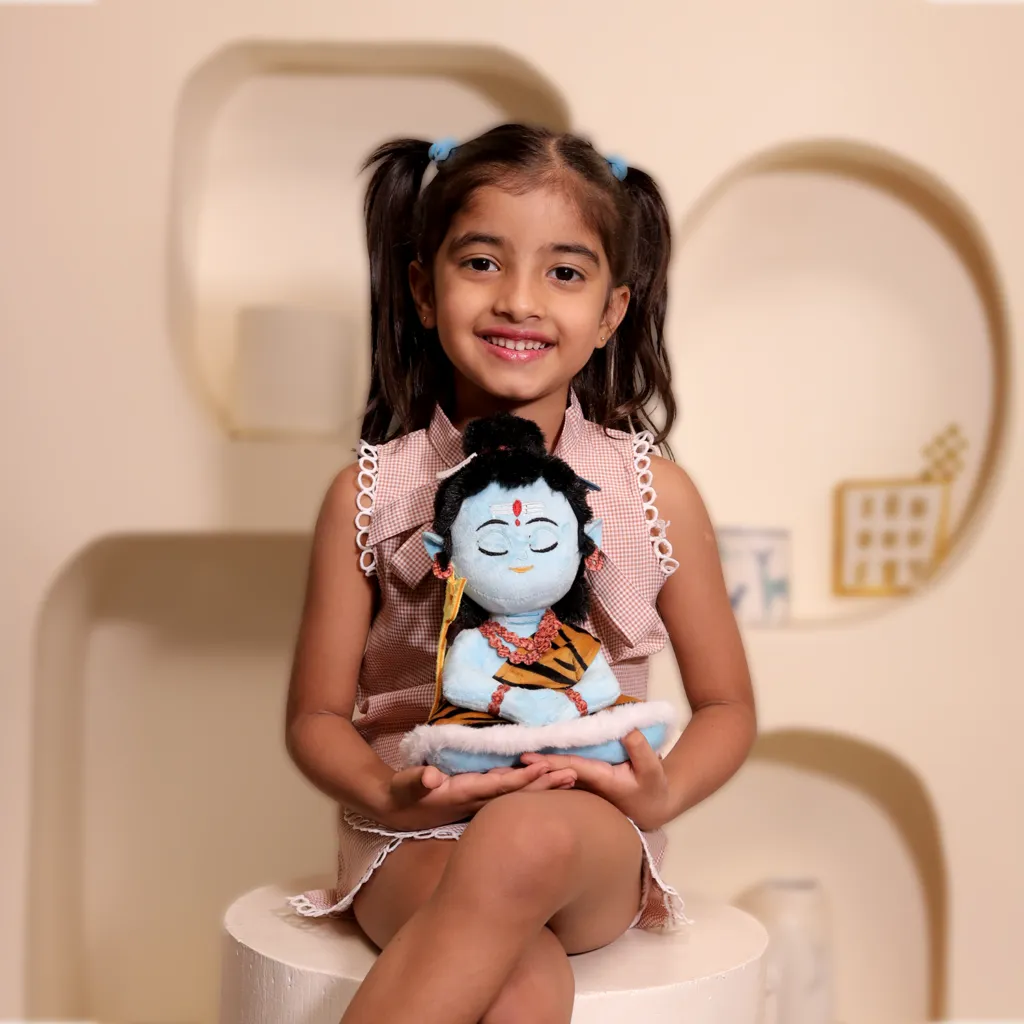
Our mantra chanting plush toys play a short set of mantras or an aarti at a gentle volume when you press the tummy, then stop. They are designed for children aged 1–5 and certified to ASTM and EN-71 toy-safety standards. With a baby under one, enjoy them together during supervised awake time, and keep all soft toys out of the sleep space.
Many families use them as part of a calm evening routine: the same prayer each night, a cuddle and lights out. If you would like something made for the youngest babies, the Plush Evil Eye is a soft take on the traditional nazar battu with a gentle rattle, designed for ages 0–3.
Choose sound that supports, not distracts
The right sound toy encourages calm curiosity rather than constant stimulation. Soft sounds, simple play and baby-safe materials matter far more than flashy features, and the best soundtrack of all is still your own voice. For more ideas, read our guide to what to look for in a musical plush toy.
Frequently asked questions
Are sound-making toys good for babies?
Gentle, age-appropriate sound toys can be a lovely part of short, supervised play, especially when a parent plays along.
Which sound toys suit newborns?
Your voice comes first. After that, soft crinkle cloths and gentle rattles designed for newborns, always with supervision.
Are noise-making toys safe for babies?
Not all of them. Toys with loud sounds, flashing lights or harsh effects can overwhelm young babies and are best avoided.
How loud should a baby’s sound toy be?
Soft and comfortable, with no sudden or sharp effects. If it feels loud at arm’s length, it is too loud.
Can sound toys overstimulate babies?
Yes. Continuous loud sound or flashing effects can be too much. Short sessions with gentle toys, and plenty of quiet time, work best.