Musical Plush Toys for Babies: What to Look For
30 December 2025
If you have ever watched a fussy baby settle while a soft toy hums a familiar tune, you already know why musical plush toys are so popular. They bring together two things little ones are drawn to: softness and sound. Chosen well, a musical plush becomes one of the most comforting objects in the house.
This guide is about the plush kind specifically: what they are, the main types, and what to check before you buy one. For a wider look at rattles, drums, xylophones and other sound toys by age, see our musical toys buyer’s guide.
What is a musical plush toy?
A musical plush toy is a soft stuffed toy with a small sound unit inside. It might be an animal, a character or a cushion. Press or squeeze it and it plays a lullaby, a rhyme, a gentle ambient sound or, in some homes, a mantra or chant.
Because the outside is meant to be held and cuddled, the fabric and stitching matter just as much as the sound.
Why babies take to them
Softness they can hold on to
Plush toys are soft, warm and always there, so many little ones adopt one as a comfort object. Over time it is the toy itself, not only its sound, that feels reassuring. It is never a replacement for being held, but it is a friendly presence during play and quiet time.
Familiar sounds, repeated
Babies love repetition. Hearing the same gentle melody at the same point in the day helps it become a cue for “this is quiet time”. That is why the same toy, used the same way, often feels more soothing as the weeks go by.
Sounds from home
For many Indian families, sound is woven into the day: a shloka in the morning, a bhajan in the evening, a grandparent humming an aarti. If you are raising children far from India, a toy that plays those same sounds can carry a little of that home atmosphere into a flat in London or a house in Texas. Babies don’t need to understand the words to enjoy the rhythm, and parents often find the familiar chants comforting too.
The main types of musical plush
Devotional and mantra plush
These play mantras, shlokas or simple chants. They suit families where devotional sounds are already part of daily life, and they double as a gentle way to introduce a deity by name and face. A soft Ganesha that chants “Om Gam Ganapataye Namaha” can mean much more to some families than a bear that plays “Twinkle Twinkle”.
Lullaby plush
Classic melodies and nursery rhymes, from Brahms’ Lullaby to “Chanda Mama”. Look for toys that play a complete, well-recorded tune rather than a few looping beeps.
Ambient-sound plush
Instead of a melody, these play a steady sound such as rain, waves or gentle shushing. Some parents like them for winding down; others find a simple song works better. Every baby is different.
Interactive plush
Talking, singing or recording toys that respond differently depending on where they are pressed. They are fun for older babies and toddlers during the day, but they are lively rather than calming, so keep them out of the bedtime routine.
| Type | Good for | Sounds |
|---|---|---|
| Devotional / mantra plush | Families who want familiar chants at home | Mantras, shlokas, aartis |
| Lullaby plush | Wind-down and quiet time | Soft melodies, rhymes |
| Ambient-sound plush | Settling and quiet moments | Rain, waves, shushing |
| Interactive plush | Daytime play for older babies and toddlers | Songs, talking, responsive sounds |
What to check before you buy
1. Safety marks and materials
- Look for recognised toy-safety standards. In the US that means ASTM F963; in the UK and Europe, EN-71 (with the UKCA or CE mark). Our plush toys are certified to ASTM and EN-71 standards.
- The fabric should be soft and non-toxic, because little ones chew, suck and press their faces into plush toys.
- Check the stitching. Seams should be tight, with no loose threads or small decorations that could come away.
2. Sound quality and volume
- The sound should be warm and clear, not tinny or harsh. If you can, listen before you buy.
- Choose a gentle volume. A simple test: hold the toy at arm’s length and next to your own ear. If it feels loud to you up close, it is too loud for a baby’s ear.
- A full melody or a clearly recorded chant is far nicer to live with than a short electronic loop. Parents hear it many, many times too.
3. Cleaning
- Babies drool on everything. Check the care label and how the sound unit is handled when the toy needs a wash.
- Fabric that keeps its softness after cleaning will stay a favourite for longer.
4. Batteries and durability
- Battery compartments should be screwed shut, not simply snapped closed.
- Give the toy a gentle test: squeeze it, press the sound button a few times, tug lightly at the seams.
5. Age suitability
- Follow the age guidance on the label. Our plush toys are designed for ages 1–5.
- For younger babies, play together and supervise. Keep it simple: one gentle sound, very soft fabric, no small parts.
- Toddlers can enjoy sturdier toys with more to press and explore.
Quick checklist
- Recognised safety certification (ASTM, EN-71)
- Tight stitching, no small parts that could detach
- Gentle, clear sound at a soft volume
- Clear care instructions
- Screw-secured battery compartment
- Age guidance that matches your child
A word on sleep
Musical plush toys can be a lovely part of the wind-down routine: a song after the bath, a chant during the last cuddle. But for babies under one, safe-sleep guidance is clear: keep soft toys out of the sleep space. Play the toy during the routine, then set it on a shelf before you lay your baby down.
Common mistakes
- Choosing loud toys. Louder is not more engaging. A quiet toy your baby enjoys calmly is the better buy.
- Overlooking the fabric. It sits right against your baby’s face and skin, so this is not the place to compromise.
- Using a lively toy at bedtime. Save interactive, talking toys for daytime.
- Ignoring your baby’s preferences. Some babies love a chant, others a lullaby. Watch how your little one responds and follow their lead.
Getting the most out of a musical plush
- Keep it consistent. Use the toy at the same moment each day, for example after the bath or during the last story.
- Don’t leave it playing all day. A sound that is always on stops feeling special.
- Join in. Hum along, say the deity’s name, clap to the rhythm. Your voice is the part your baby loves most.
- Rotate. Two or three toys with different sounds keep things fresh.
How we approach musical plush at Panda’s Box
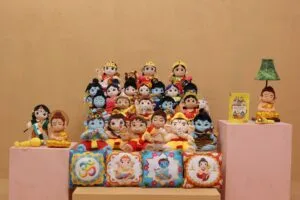
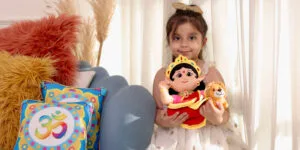
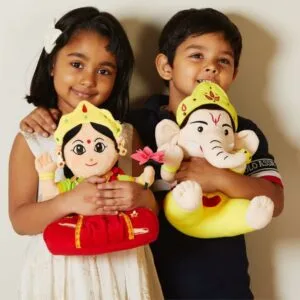
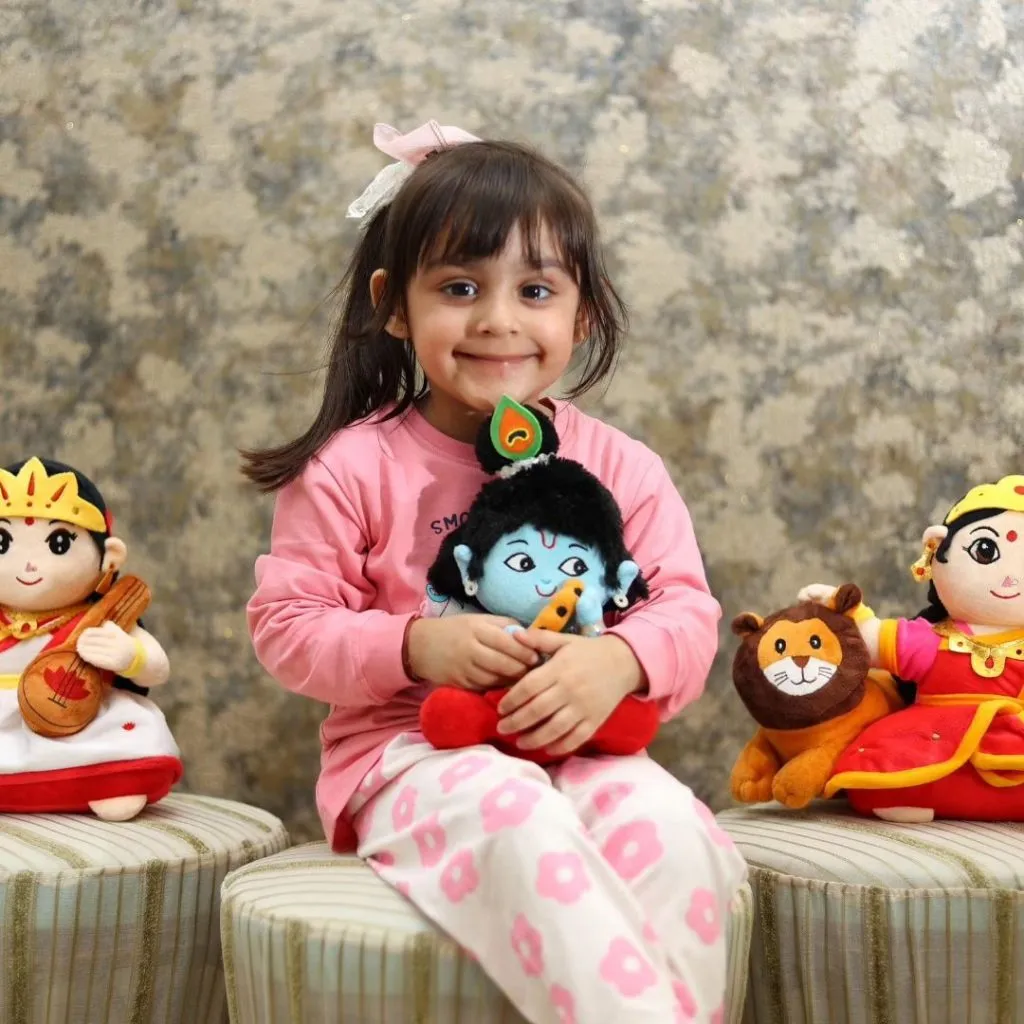
Our plush toys are made around one simple idea: familiar devotional sounds, in a soft form a child can hold. Press the tummy and each deity chants its own mantras, so Baby Krishna plays the Hare Krishna Maha-mantra and Baby Ganesha plays Ganesha mantras and his aarti. They come in two sizes, small (about 23 cm) for little hands and travel, and medium (about 28 cm) for proper hugs, and are certified to ASTM and EN-71 toy-safety standards.
If you are new to them, the small Baby Krishna and small Baby Ganesha are gentle places to start, or browse all our mantra chanting toys.
Frequently asked questions
Are musical plush toys suitable for young babies?
Choose toys made for your child’s age, with very soft fabric, no small detachable parts, a gentle volume and a screw-secured battery compartment. Our plush toys are designed for ages 1–5; with younger babies, play together and supervise, and keep soft toys out of the sleep space.
Which sounds do babies like most?
It varies. Many babies enjoy soft lullabies or steady, gentle sounds. In homes where chanting is part of daily life, familiar mantras can feel especially soothing because the baby already hears them every day.
Are mantra toys a good choice for babies?
Mantras are rhythmic and repetitive, which many babies find soothing. For families who want to keep devotional sounds part of home life, especially while living abroad, a mantra plush is a gentle, screen-free way to do it.
How often should my baby use a musical toy?
Use it at particular moments, such as winding down before naps or bedtime, rather than all day. That way the sound stays linked to calm, quiet time.
Where do you ship from, and how long does delivery take?
Orders ship from India within 24 hours. Delivery usually takes 8–12 days to the USA, Canada and Europe, 7–10 days to the UK, Singapore and UAE, and 15–20 days to Australia.