Plush Toys vs Plastic Toys: Which Is Better for Babies?
2 August 2025
Every parent standing in a toy aisle, or scrolling a toy shop at midnight, has faced the same quiet debate: the soft, cuddly plush or the bright, rattling plastic set? When it comes to plush toys and plastic toys, there is no single winner. Each brings something different to your baby’s playtime and comfort, and knowing what each does well helps you build a toy box that suits your child as they grow.
The two types at a glance
Plush toys, also called soft toys, are made from fabric with a soft filling: teddy bears, bunnies and cuddly companions your child can hug. Plastic toys include stacking rings, rattles, shape sorters and activity cubes. Both have earned their place in nurseries around the world, but they suit different kinds of play.
Comfort and security
This is where plush toys shine. A soft toy often becomes a child’s first friend. The gentle texture feels lovely to hold, and many little ones grow attached to one special companion that comes along everywhere.
Parents often notice that a familiar soft toy helps at bedtime, during teething, on a long-haul flight to visit grandparents, or in a new childcare setting. Nobody cuddles a shape sorter to sleep.
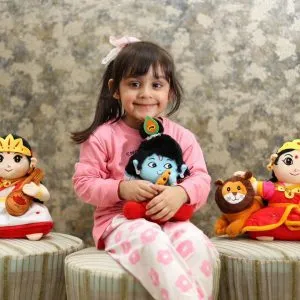
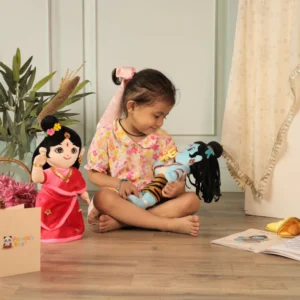
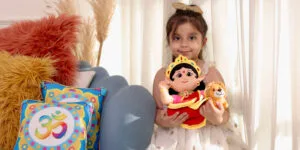
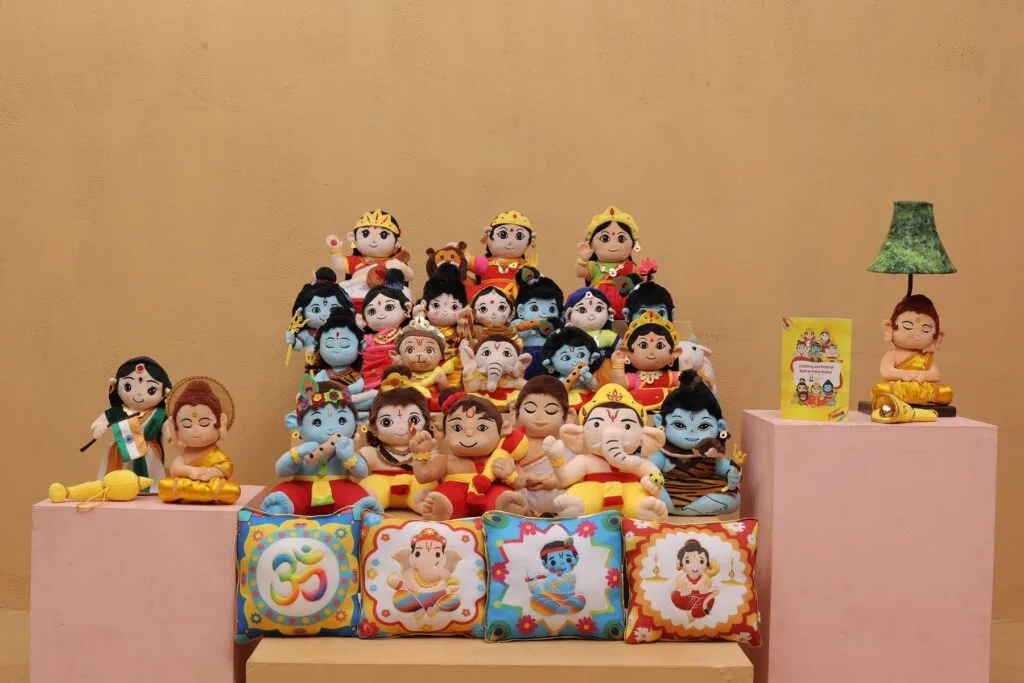
For families raising children away from India, a soft toy can also carry a little piece of home. A plush Ganesha, Krishna or Hanuman that chants familiar mantras brings comfort and a sense of heritage at the same time.
Hands-on, exploring play
Plastic toys tend to lead in structured, hands-on play. Firm surfaces, bright colours and moving parts are made for grasping, stacking, sorting and pressing. Little ones love working out that pressing a button makes something happen, or that the big ring goes on first.
Musical toys deserve a special mention. Whether plush or plastic, toys that play sounds or songs tend to catch a baby’s attention. Plastic musical toys often have buttons and lights, while musical plush toys wrap the same delight in something soft and huggable.
Soft toys can be engaging for small hands too: different fabrics, crinkly panels and gentle sounds give little ones plenty to explore.
Safety first
Safety matters for any toy, and both types need a careful look.
For plush toys: look for tight, secure seams, embroidered or securely fixed features, and no small parts that could come loose. Check for recognised toy-safety certification. Washable fabric is a big plus, because soft toys inevitably meet drool and spilled milk. For babies under 12 months, keep soft toys out of the cot or crib during sleep.
For plastic toys: choose non-toxic, BPA-free materials, sturdy construction and rounded edges, with no small pieces that could break off. Babies chew, throw and drop their toys constantly, so quality matters. Check labels for recognised safety standards.
All Panda’s Box plush toys are certified to ASTM and EN-71 toy-safety standards and are designed for ages 1–5.
Durability and cleaning
Plastic toys usually win on durability. They survive being thrown and chewed and wipe clean in seconds, which is handy during cold and flu season.
Plush toys need a little more care. They collect dust, so regular gentle cleaning is important (always follow the care label, and if the toy has a sound unit, keep the unit dry). A well-made soft toy that is looked after can last for years and often becomes a treasured keepsake long after your child has outgrown it.
Which suits which age?
For young babies, simple high-contrast toys and gentle sounds hold their attention, and your face and voice are the best toy of all. Soft toys are lovely for supervised, awake cuddles.
From around four to six months, as babies start grasping, easy-to-hold rattles and textured toys keep little hands busy.
In the toddler years, play really opens up. Stacking and sorting toys come into their own, while soft toys become partners in pretend play: tea parties, bedtime routines and long, made-up stories. This is often when a child’s bond with a favourite plush friend is strongest.
The verdict: it is not either-or
The honest answer is that a happy toy box usually contains both. They are not rivals; they are teammates.
Plush toys bring comfort, closeness and gentle sensory play. Plastic toys are great for stacking, sorting and hands-on exploring. A musical toy or two adds joy to the everyday. Let safety, quality and your child’s age guide you above all.
Building a balanced toy collection
Rather than asking which type to buy, think about balance: a few well-chosen soft toys for cuddles and calm, a handful of simple plastic or wooden toys for hands-on play, and something musical for shared moments.
If you are looking for a soft toy with meaning, our mantra chanting plush toys play gentle mantras when you press the tummy, and our small plush deities (about 23 cm) are just the right size for little hands. For more help choosing, read 7 things to check before buying a soft toy.