The Essence of Vasant Panchami (Saraswati Puja)
14 February 2024
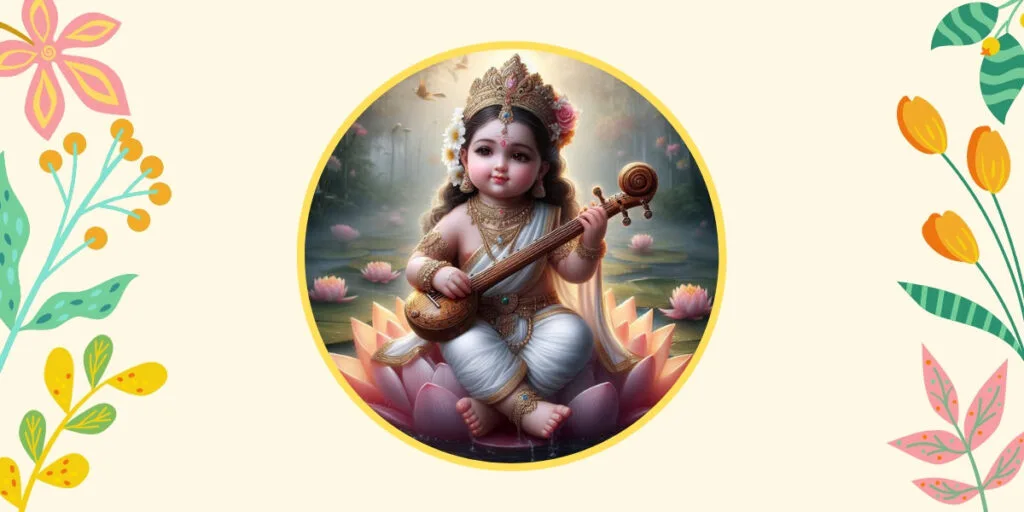
As winter begins to loosen its grip, Hindu families around the world welcome Vasant Panchami, a gentle, joyful festival of learning, music and the arts, dedicated to Goddess Saraswati. Here is the story behind the day, and some simple ways to celebrate it with children, wherever you live.
When is Vasant Panchami celebrated?
Vasant Panchami falls on the fifth day (Panchami) of the waxing moon (Shukla Paksha) in the Hindu month of Magha, which usually lands in late January or early February. It marks the turn from winter towards spring and the reawakening of nature. Because it follows the lunar calendar, the date changes each year, so check your local temple or a Hindu calendar.
Why is Vasant Panchami celebrated?
The festival centres on the worship of Goddess Saraswati, the deity of knowledge, wisdom, music and the arts. Many believe that Saraswati appeared on this day to bless the world with learning and speech. For that reason it is a special day for students, musicians, artists and anyone beginning something new to learn. In many families it is also the day a young child writes their first letters, a ceremony known as Vidyarambham or Akshar Abhyasam in different regions.
Why do people wear yellow?
Yellow is the colour of Vasant Panchami. It recalls the mustard flowers (sarson) that cover the fields of north India in spring, a sign that the season is changing and life is renewing. Dressing in yellow honours that brightness. It is also a very easy tradition to bring into a home abroad: a yellow top for school, a yellow dupatta, or yellow flowers on the table.
Traditional foods for Vasant Panchami
- Khichdi. A simple, wholesome dish of rice and lentils, often offered as prasad during Saraswati Puja. It symbolises simplicity and purity, and it’s prepared in many regions, including North India, West Bengal and Gujarat.
- Sweet rice (meethe chawal or zarda). Rice cooked with sugar and fragrant spices such as saffron, cardamom and cloves, which gives it the yellow colour of the day.
- Kesari bhaat. Saffron rice made with ghee and sugar, often offered at Saraswati Puja and enjoyed especially in Karnataka and Maharashtra.
- Ladoos. Round sweets made from besan (gram flour), semolina or other flours, shared as prasad.
Little ones can help wash the rice, count the cardamom pods or roll a (lopsided) ladoo. Kitchen help is one of the easiest ways for children to take part in a festival.
How is Vasant Panchami celebrated?
The heart of the day is the worship of Devi Saraswati. Families and communities set up altars decorated with flowers, fruit, incense and traditional offerings, and recite prayers, hymns and mantras in her praise, asking for her blessings on learning and wisdom.
People wear yellow, and offer fresh flowers, especially marigolds and jasmine. Books, pens and musical instruments are often placed before the goddess to be blessed. In India, schools and colleges hold special ceremonies, and students sing bhajans and perform music, dance and recitation. Abroad, many temples and community centres hold a Saraswati Puja, often on the nearest weekend.
Celebrating with children at home
- Place your child’s favourite books, crayons or a toy instrument near a picture of Saraswati and say a short prayer together.
- Dress in yellow and make a simple yellow-flower garland.
- Tell the story of Saraswati and her veena, and her swan, which is said to separate milk from water, just as wisdom separates good from bad.
- Play some music or sing together. Saraswati is the goddess of music, after all.
Let’s conclude
As we celebrate Vasant Panchami, we honour Goddess Saraswati and the timeless gift of learning she represents. To bring her into your child’s day in a gentle, playful way, our Mantra Chanting Devi Saraswati plush plays Saraswati mantras at the press of her tummy. You can find all our goddess and deity plush in mantra chanting toys.