Why Does Maa Durga Look Different During Navratri and Durga Puja?
1 October 2026
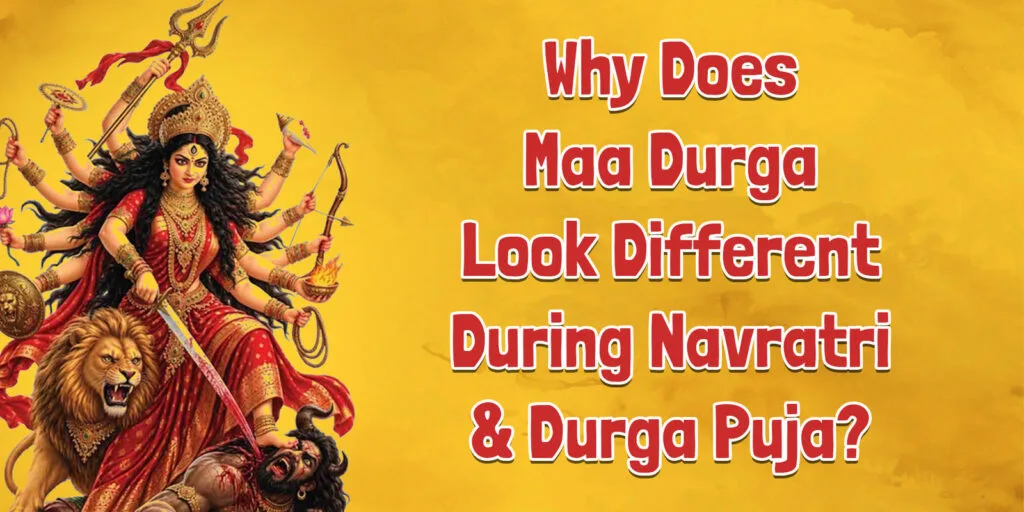
Walk into a Durga Puja pandal, whether in Kolkata or in a school hall in London, and you will often see Maa Durga standing tall with her ten arms, weapons in her hands, her lion beside her and Mahishasura at her feet.
Now think of Navratri. You might pray to Maa Shailputri on one day, Maa Brahmacharini on another, Maa Katyayani later in the week and Maa Mahagauri on Ashtami. They can look completely different.
So a question naturally comes up: are these all forms of Maa Durga, or different goddesses altogether?
The answer is more beautiful than you might expect. Same Devi. Different traditions. One Shakti.
Why are there so many forms of Maa Durga?
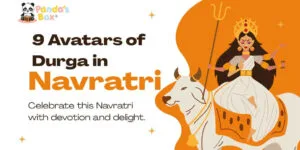
Navratri isn’t nine days of worshipping exactly the same image of Durga. Each day is traditionally linked to one of the Navadurga, the nine forms: Shailputri, Brahmacharini, Chandraghanta, Kushmanda, Skandamata, Katyayani, Kalaratri, Mahagauri and Siddhidatri.
Think of it this way: we describe the same person with different words depending on the quality we want to talk about. Maa Durga’s many forms let devotees reflect on different sides of Shakti: courage, devotion, strength, compassion, wisdom and more.
- Shailputri: strength and grounding
- Brahmacharini: devotion and determination
- Chandraghanta: courage
- Kushmanda: creative energy
- Skandamata: motherhood
- Katyayani: fierce strength
- Kalaratri: protection and the end of darkness
- Mahagauri: purity and grace
- Siddhidatri: spiritual fulfilment
Then why does she look so different at Durga Puja?
Durga Puja focuses on one particular story: Maa Durga as Mahishasuramardini, the goddess who defeats the buffalo demon Mahishasura. The familiar Durga Puja image, with her many arms, her weapons, her lion and Mahishasura, captures that one powerful scene.
During Navratri you meet Maa Durga in one form after another. During Durga Puja, the story often comes alive in a single moment: Maa Durga facing Mahishasura.
Her lion represents her power. Her weapons represent the strength the gods gave her. And Mahishasura represents the force she overcomes.
So which one is the “real” Maa Durga?
The nine forms of Navratri? The ten-armed Mahishasuramardini of Durga Puja? The Durga in your local temple? The form your grandmother has prayed to for years?
There is no need to choose just one. Hindu traditions have long understood the divine through many forms, names and stories. The form may change with the tradition, the region or the story being remembered. The Shakti remains.
One Maa, so many ways to welcome her
- In West Bengal, Durga Puja transforms whole neighbourhoods with pandals, idols, art, music and community feasts.
- In Gujarat, Navratri means nine nights of Garba and Dandiya.
- In North India, Navratri often centres on fasting, puja and worship of the nine forms.
- In South India, many families set up a Golu (or Kolu): steps of dolls and figurines displayed for visitors.
And outside India, all of these traditions meet. A city abroad might have a Bengali association’s Durga Puja, a Gujarati community’s Garba night and a Tamil family’s Golu, all in the same week. Children growing up abroad often see more variety than their parents did.
We don’t always preserve a tradition by doing it exactly the same way everywhere. Sometimes we preserve it by making it our own.
How do we introduce all these forms to children?
For adults, the difference between Navratri and Durga Puja may feel familiar. For a child, it can be confusing.
“Mumma, why does Maa Durga look different here?”
“Is this the same Durga?”
“Why does she have so many hands?”
“Why is there a lion?”
“Who is that under her feet?”
Honestly, these are wonderful questions. Sometimes the easiest way to keep a tradition alive is simply to let a child ask about it, and to answer one question at a time.
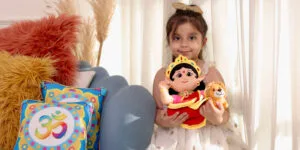
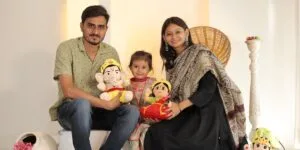
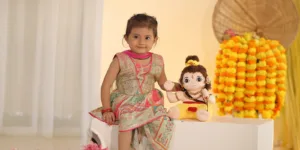
Introducing children to Indian traditions doesn’t have to begin with a long explanation. It can begin with something they can see, hold and listen to. That is the idea behind our Mantra Chanting Devi Durga: Maa Durga in a soft, child-friendly form, with mantras children can play themselves by pressing her tummy. There is also a small Devi Durga for little hands.
Want to go deeper? Read about the nine avatars of Durga in Navratri, or the meaning of Navratri’s nine nights.