10 Simple Ways to Raise Rooted Kids in Modern Times
22 June 2026
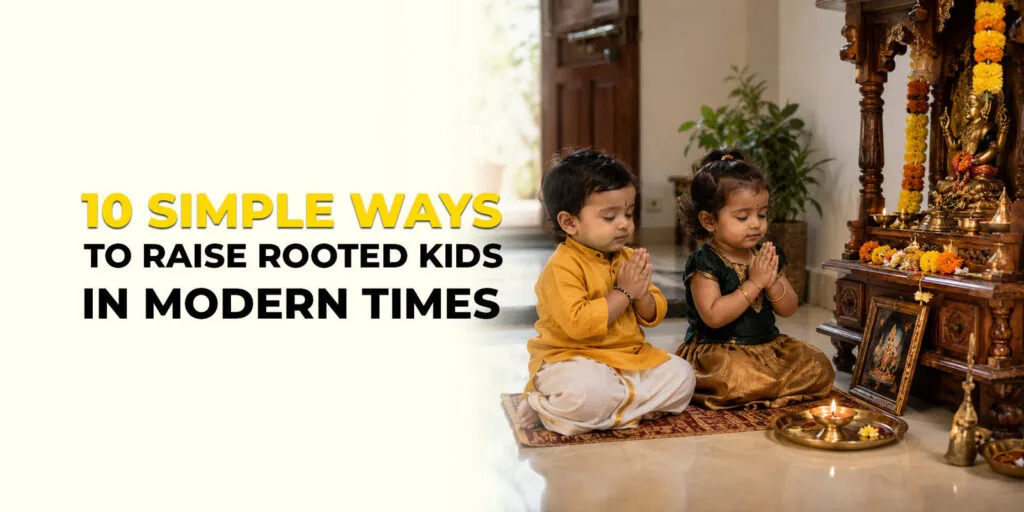
In a world of screens, endless distractions and fast-changing trends, many parents ask the same question, and parents raising children outside India ask it more than most:
How do we help our children stay connected to their roots while preparing them for the future?
Raising rooted children doesn’t mean forcing traditions or rejecting modern life. It means helping children understand who they are, where they come from and the values that shape their family. Children who grow up with a clear sense of where they belong often carry it with them as confidence and a feeling of home, whether they live in Mumbai, Manchester or Melbourne.
Here are 10 simple ways to raise rooted kids in modern times.
1. Make culture part of everyday life
Don’t save culture for festivals. Bring it into ordinary days: a short prayer before meals, a bedtime story from Indian mythology, a game or puzzle with familiar deities and festivals. Small habits repeated often matter more than one grand celebration a year.
2. Start with stories, not lessons
Children connect with stories far more easily than with lectures. The stories of Krishna, Hanuman, Ganesha, Durga and so many others are full of courage, kindness, friendship, perseverance and humility. Let children fall in love with the stories first. The values follow naturally.
3. Celebrate festivals with meaning
Festivals are wonderful chances to learn. Alongside the sweets, lights and gifts, share the stories behind Diwali, Janmashtami, Ganesh Chaturthi, Navratri and Raksha Bandhan. Abroad, festivals can fall on an ordinary school day, so even a small celebration at home, or a visit to the local mandir at the weekend, helps. When children understand the “why”, they’re far more likely to cherish the tradition as they grow.
4. Welcome questions about culture
Children are naturally curious, and children growing up in a mixed-culture world even more so. Why do we fold our hands and say namaste? Why do we touch elders’ feet? Why do we light diyas? Why doesn’t my friend’s family do this? Rather than brushing these questions aside, use them to start real conversations. Curiosity is often the doorway to connection.
5. Create screen-free family rituals
Modern life can feel overwhelming for parents and children alike. Setting aside even 10–15 minutes a day for something screen-free can make a real difference: storytelling, listening to mantras, reading together, or simply talking about the day. These are the moments children remember.
6. Introduce children to mantras
Mantras can become a calming, comforting part of a child’s day. Short chants such as the Gayatri Mantra, a Ganesha mantra or a few lines of the Hanuman Chalisa give children familiarity with their culture and a quiet moment together with you. The goal isn’t perfection or memorisation. It’s exposure and connection. A mantra chanting plush or My First Book of Mantras can make that a natural part of playtime.
7. Let grandparents share their stories
Grandparents are often the keepers of family traditions and wisdom. If they live in India or in another city, make room for regular video calls where they tell a story, share a memory of a childhood festival or explain a family tradition. These conversations help children feel part of something bigger than themselves.
8. Choose toys that reflect your values
The toys, books and activities children engage with shape how they see the world. Toys that introduce Indian stories, music and traditions bring culture into playtime, so it doesn’t feel separate from fun. Our books and games and storyteller toys were made with exactly this in mind.
9. Lead by example
Children notice what we do far more than what we say. When they see family members practising gratitude, respecting elders, taking part in traditions and valuing their heritage, they absorb it naturally. Culture is often caught rather than taught.
10. Focus on connection, not perfection
Many parents, especially those far from extended family, worry they aren’t doing enough. But raising rooted children isn’t about knowing every story, celebrating every festival flawlessly or following every tradition. It’s about moments of connection:
- A story before bed.
- A prayer together.
- A festival celebrated with joy.
- A question answered with patience.
These small moments add up to a strong sense of identity and belonging.
Final thoughts
Children today don’t need to choose between being globally aware and culturally connected. They can be both. By weaving stories, traditions, values and family moments into everyday life, parents can help children grow roots strong enough to hold them wherever life takes them.
At Panda’s Box, we believe culture is best introduced through joy, curiosity, stories and play. For more ideas, read how to introduce spirituality to kids and how to introduce Hindu gods to kids.
After all, the goal isn’t just to raise successful kids. It’s to raise rooted kids.