What Happens During Baby Playtime? A Gentle Guide for Parents
11 June 2024
Watch a baby at play for a few minutes and you will see a lot going on. A squeeze of a soft toy, a long look at your face during peek-a-boo, a swipe at something that jingles. To a tired parent it can look like nothing much. To your baby, it is the whole world.
This is a gentle, parent-to-parent look at what play looks like in the first year or two: what parents often notice, which kinds of play babies seem to enjoy at different ages, and how to keep playtime calm, close and simple. You do not need special equipment, and you do not need to turn play into a lesson.
Play in the first year: what parents often notice
- Faces come first. In the early weeks, most babies are far more interested in a familiar face than in any toy. Your smile, your voice and your expressions are the main event.
- Sounds become familiar. Many parents notice their baby turning towards a voice, a lullaby or a gentle sound they have heard many times before.
- Hands get busy. Over the months, babies move from watching to reaching, grabbing, squeezing and passing things from hand to hand.
- Repetition is the fun. Babies love doing the same thing again and again. The fifth round of peek-a-boo is often funnier to them than the first.
- Every baby has their own pace. Some babies are busy explorers; others like to watch for a long time before joining in. Both are normal.
Back-and-forth play: the simplest game of all
The everyday back-and-forth between a baby and a caregiver is often called “serve and return”, like a gentle game of tennis. Your baby coos, you coo back. Your baby looks at the ball, you name it. Your baby smiles, you smile.
It sounds almost too simple, and that is the point. You do not need to plan it. Narrating your day (“Now we’re putting on your socks, one sock, two socks”), answering babbles as if they were conversation, and pausing to let your baby “reply” are all part of this kind of play.
Touch, sound and sight: gentle sensory play
Touch
Babies explore with their hands and, very often, their mouths. Soft fabrics, a smooth wooden ring, a crinkly cloth book and your own hands all feel different. Offer one or two things at a time and let your baby take their time.
Sound
Babies are surrounded by sound from the very start. Many parents find that their baby settles to a familiar lullaby, a song from home or a gentle chant they hear every evening. Keep volumes soft, and give your baby quiet time too. Not every moment needs background music.
Sight
In the early months, simple, bold patterns and faces tend to hold a baby’s gaze. Later, babies enjoy following a toy as you move it slowly from side to side, or watching a sibling play nearby.
Why babies grow attached to a favourite soft toy
Many children pick one special soft toy or blanket and carry it everywhere. Parents often notice that a familiar comfort object helps at moments of change: a new childcare setting, a long flight to visit grandparents, or a first night in a new room. It is a normal and much-loved part of childhood.
A few safety reminders: for babies under 12 months, keep soft toys out of the sleep space and enjoy them during supervised, awake play. Our own plush toys are designed for ages 1–5.
Play ideas by age
| Type of play | What it looks like | Simple idea | Typical age |
|---|---|---|---|
| Back-and-forth | Taking turns with sounds, smiles and looks | Copy your baby’s coos and wait for a reply | From birth |
| Press and listen | Pressing or squeezing something to make it respond | A soft toy that plays a sound when pressed, played together | Around 6–12 months and up |
| Hide and find | Enjoying things that disappear and come back | Peek-a-boo, or a toy hidden under a cloth | Around 6–12 months |
| Pretend play | Copying everyday life | Feeding a plush friend, tucking it into bed | Around 12–24 months |
| Checking with you | Looking at your face to see how you feel about something new | Smile and name the new thing calmly | Around 9–18 months |
Ages are rough guides only. Your baby will show you what they are ready for.
Signs your baby has had enough
Too much noise, light or activity can be overwhelming. Babies often show it by turning away, fussing, arching their back, rubbing their eyes or staring blankly. When you see these signs, slow down: dim the lights, put the toys away and offer a cuddle. Quiet time is part of a healthy play routine, not a break from it.
A calm, uncluttered space with a few well-loved toys usually works better than a room full of flashing, beeping gadgets.
What traditional baby care already does well
Many traditional Indian baby-care habits are, at heart, about closeness and rhythm:
- A daily massage is a quiet time of touch and eye contact between parent and baby.
- Lullabies, shlokas and family songs fill a home with familiar sounds.
- Grandparents, aunts and uncles mean lots of faces, voices and laps.
- Carrying babies close keeps them in the middle of family life.
Living abroad, far from extended family, these habits can be harder to keep. Video calls with grandparents, a regular song at bath time or a short evening prayer are simple ways to bring some of that rhythm into your home.
Where Panda’s Box fits in
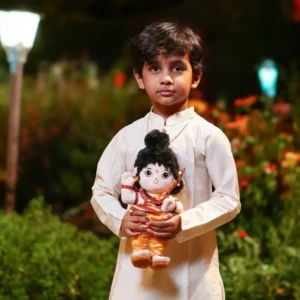
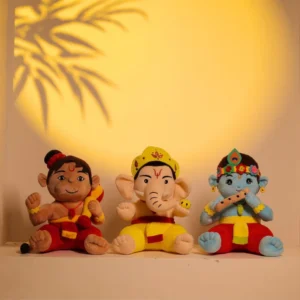
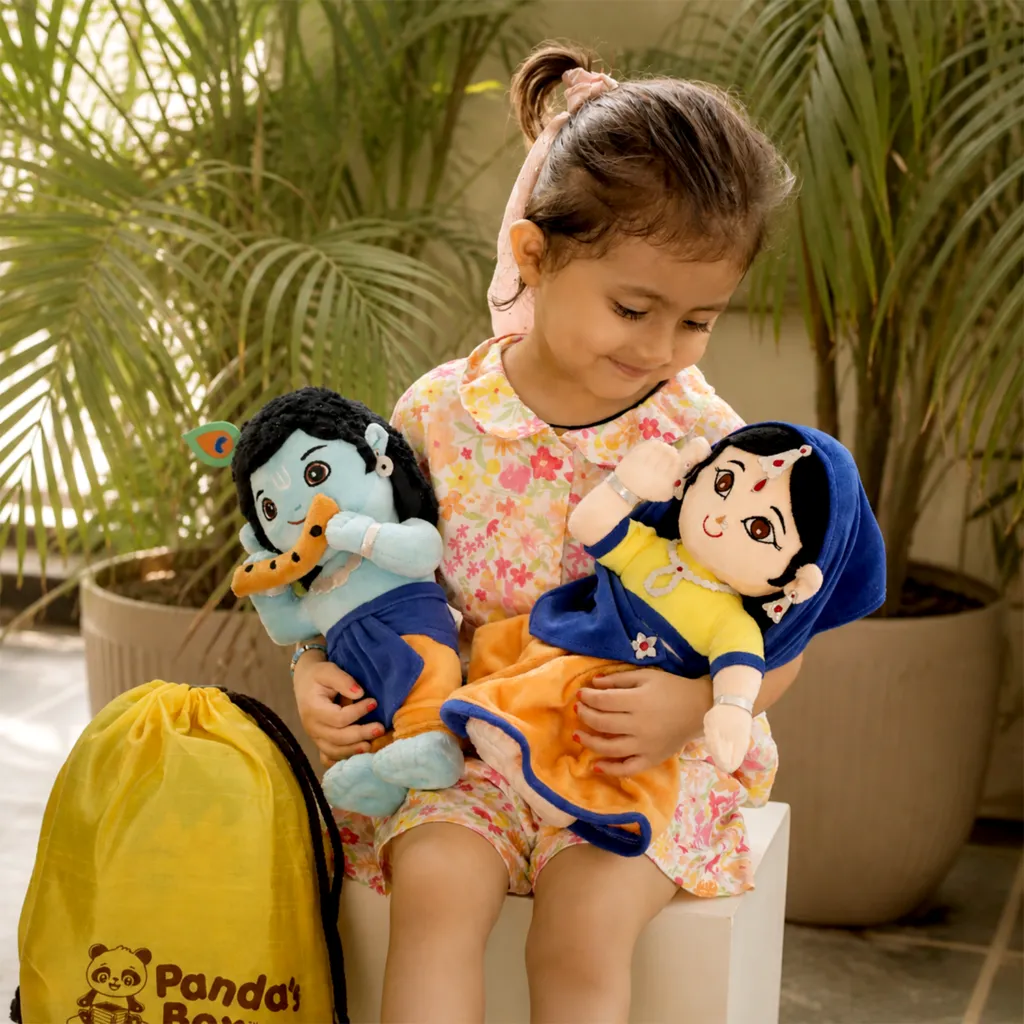
Our mantra chanting plush toys are made for exactly this kind of calm, shared play. Press the tummy and a soft toy like Baby Krishna or Baby Ganesha plays gentle mantras: a sound your child can come to recognise as part of the evening routine, and a little piece of home for families far from India. They are certified to ASTM and EN-71 toy-safety standards and designed for ages 1–5.
The most important toy is you
No toy can replace a present, responsive grown-up who talks, sings, plays and makes a baby feel safe. Toys are helpers. Your attention, your voice and your lap are what your baby enjoys most.
Frequently asked questions
How much should I play with my baby each day?
There is no set number. Short, relaxed moments spread through the day, during nappy changes, feeds, bath time and cuddles, all count as play.
Can a baby have too many toys?
Many parents find that a few toys at a time keep a baby more settled than a big pile. Rotating a small selection every week or so keeps things feeling fresh.
Why does my baby love the same game over and over?
Repetition is comforting and fun for babies. Knowing what comes next, and being right, is part of the joy.
When should I talk to a doctor about my baby’s play or progress?
If you have any worries, about smiling, babbling, responding to sounds, or losing skills they had before, speak to your paediatrician or health visitor. They know your baby and can advise you.
Looking for a gentle first companion? Browse our small plush deities or read our guide to choosing safe soft toys for little ones.