Michhami Dukkadam: The Jain Festival That Teaches Us How to Say Sorry, Forgive and Start Fresh
21 September 2026
Have you ever had a fight with your brother or sister?
Maybe they took your favourite toy. Maybe you ate the last piece of chocolate and blamed someone else. Maybe you said something mean when you were angry, and later thought, “Okay. That was not very nice.”
Then comes the awkward part. How do you say sorry? You want to, but a little voice says, “Why should I say it first?”
Sounds familiar? There is a beautiful Jain tradition that speaks directly to this feeling. It is called Michhami Dukkadam, and it is much more than simply saying sorry.
So, what does Michhami Dukkadam actually mean?
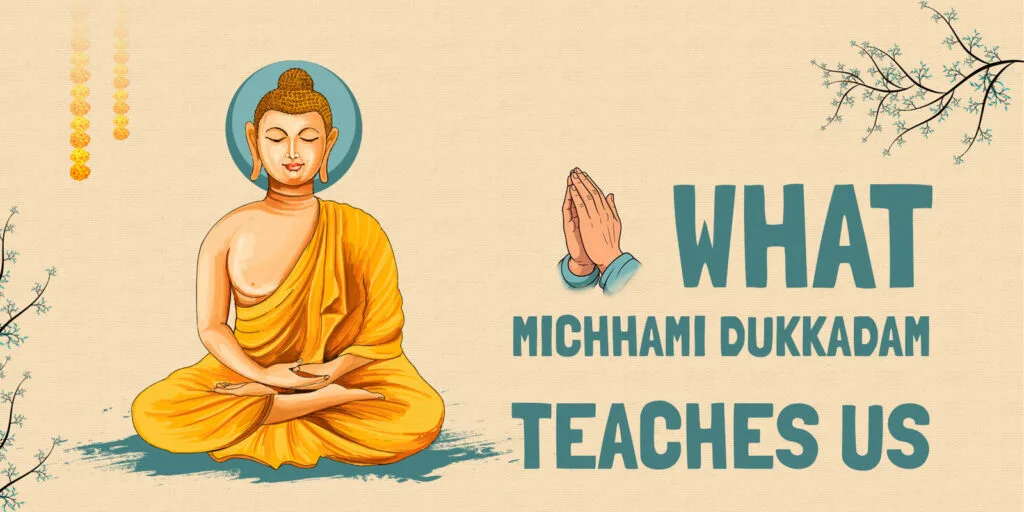
Jains say “Michhami Dukkadam” during Paryushan as they seek forgiveness for any harm they may have caused, knowingly or unknowingly.
A commonly given explanation of the Prakrit phrase is:
- Michhami: may it become fruitless
- Dukkadam: the wrong or bad deed
In simple words: “If I have hurt you, I’m sorry. I hope that wrong doesn’t leave a lasting mark.”
Not just people: all living beings
The Jain tradition takes the idea much further. A well-known forgiveness prayer says:
I forgive all living beings.
May all living beings forgive me.
I have friendship with all living beings.
I have enmity with none.
All living beings. Not just Mum. Not just Dad. Not just the friend you argued with yesterday. Everyone, including lives we might not even notice.
Picture this. You are walking through a garden and there is a tiny ant on the path. Or you pluck a flower without thinking. Or you snap at a friend because you are having a bad day. Sometimes we hurt without meaning to, and sometimes we don’t even realise we did.
That is what makes this idea so beautiful. It asks us to pause, look around, and wonder: “Did I hurt someone? Could I have been kinder?”
And then the tricky part: forgiving
Michhami Dukkadam isn’t only about asking others to forgive you. It is also about forgiving others. Which, let’s be honest, can be hard.
“But they started it!” “They broke my stuff!” “She said it first!” We have all been there.
Forgiving someone doesn’t mean saying that what happened was okay. It simply means choosing not to carry the anger forever.
Maybe that is why children understand this better than we think. Two siblings can have a full-blown fight at 4 pm and be sharing a packet of crisps at 4:07. “Fine. I’m not angry any more.” Done.
Not just a once-a-year “sorry”
Looking back at our actions is connected to Pratikraman, the Jain practice of reflecting on where we may have gone wrong and seeking forgiveness. The annual Samvatsari Pratikraman, at the close of Paryushan, is an important part of it.
So Michhami Dukkadam isn’t just “Oh, it’s that day, send the message to the family group.” It is a moment to look back: maybe you were unkind, maybe you lost your temper, maybe you hurt someone without meaning to. And maybe you can make it right.
Bringing the tradition into a child’s world
For Jain families raising children far from India, the Paryushan atmosphere of home, with grandparents, the derasar down the road and the whole community fasting and reflecting together, can be hard to recreate. Children connect with culture best when they can experience it, not just read about it.
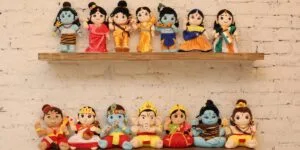
That is why we made the Mantra Chanting Jain Swami, a soft plush companion about 28 cm tall. With a gentle press, children can hear Jain chants, so the tradition becomes something they can hold, hear and grow up with.
Sometimes children don’t need a long lecture about a tradition. They just need a little moment with it: a story, a chant, a familiar face sitting beside them. And somewhere along the way, they learn to pause before they speak, notice the little lives around them, say sorry when they need to, and forgive when they can.
Michhami Dukkadam.