10 Easy Mantras Every Child Can Learn
9 June 2026
Short mantras are one of the gentlest ways to share Indian traditions with children. Their rhythm and repetition make them easy to remember, and saying one together, before a meal, at bedtime or before a big day, quickly becomes a calm little family ritual.
Children don’t need to understand every word straight away. What matters most is the feeling the mantra carries: peace, comfort, confidence and connection. For families living far from India, a mantra a child can say on their own is also a lovely link to grandparents and to home.
Here are ten simple mantras children can learn and enjoy, each with the Sanskrit, an easy transliteration and a child-friendly meaning.
1. Vakratunda Mahakaya (prayer to Lord Ganesha)
Mantra
वक्रतुण्ड महाकाय सूर्यकोटि समप्रभ।
निर्विघ्नं कुरु मे देव सर्वकार्येषु सर्वदा॥
Vakratunda Mahakaya Suryakoti Samaprabha,
Nirvighnam Kuru Me Deva Sarva-Karyeshu Sarvada.
Meaning: O Lord Ganesha, mighty and shining like a million suns, please remove the obstacles from everything I do.
Why children like it: many children learn it as their very first prayer, said before school, a competition or anything new.
Values: confidence, positivity and the courage to try new things.
2. Saraswati Vandana (prayer for learning)
Mantra
सरस्वति नमस्तुभ्यं वरदे कामरूपिणि।
विद्यारम्भं करिष्यामि सिद्धिर्भवतु मे सदा॥
Saraswati Namastubhyam Varade Kamarupini,
Vidyarambham Karishyami Siddhirbhavatu Me Sada.
Meaning: O Goddess Saraswati, giver of blessings, I bow to you. As I begin to learn, may I always succeed.
Why children like it: it is often said before homework or on the first day of a new school year.
Values: a love of learning and curiosity.
3. Gayatri Mantra
Mantra
ॐ भूर्भुवः स्वः।
तत्सवितुर्वरेण्यं।
भर्गो देवस्य धीमहि।
धियो यो नः प्रचोदयात्॥
Om Bhur Bhuvah Swah,
Tat Savitur Varenyam,
Bhargo Devasya Dhimahi,
Dhiyo Yo Nah Prachodayat.
Meaning: May the divine light guide our thoughts towards what is good and wise.
Why children like it: it is one of the most widely chanted mantras in Indian tradition, so children often hear it at home and at the temple.
Values: wisdom and mindfulness.
4. Shanti Mantra (Sarve Bhavantu Sukhinah)
Mantra
ॐ सर्वे भवन्तु सुखिनः।
सर्वे सन्तु निरामयाः।
सर्वे भद्राणि पश्यन्तु।
मा कश्चिद् दुःखभाग्भवेत्॥
Om Sarve Bhavantu Sukhinah,
Sarve Santu Niramayah,
Sarve Bhadrani Pashyantu,
Ma Kashchid Duhkha Bhag Bhavet.
Meaning: May everyone be happy, may everyone be healthy, may everyone see goodness, and may no one suffer.
Why children like it: its message, wishing everyone well, is easy for a small child to understand.
Values: kindness, compassion and empathy.
5. Om Namah Shivaya
Mantra
ॐ नमः शिवाय॥
Om Namah Shivaya.
Meaning: I bow to Lord Shiva.
Why children like it: five syllables, simple and rhythmic. Even toddlers pick it up.
Values: calm and quiet reflection.
6. Hanuman mantra
Mantra
ॐ हनुमते नमः॥
Om Hanumate Namah.
Meaning: Salutations to Lord Hanuman.
Why children like it: children love Hanuman’s courage, strength and loyalty, and his stories are full of adventure.
Values: bravery and determination. When your child is ready for something longer, the Hanuman Chalisa is a lovely next step.
7. Mahamrityunjaya Mantra
Mantra
ॐ त्र्यम्बकं यजामहे सुगन्धिं पुष्टिवर्धनम्।
उर्वारुकमिव बन्धनान् मृत्योर्मुक्षीय माऽमृतात्॥
Om Tryambakam Yajamahe Sugandhim Pushtivardhanam,
Urvarukamiva Bandhanan Mrityor Mukshiya Mamritat.
Meaning: A prayer to Lord Shiva for strength, well-being and protection.
Why children like it: its slow, steady rhythm is soothing to listen to and to chant.
Values: resilience and inner strength.
8. Lakshmi mantra
Mantra
ॐ श्रीं महालक्ष्म्यै नमः॥
Om Shreem Mahalakshmyai Namah.
Meaning: Salutations to Goddess Lakshmi.
Why children like it: they hear it at Diwali and other family celebrations.
Values: gratitude and generosity.
9. Krishna mantra
Mantra
ॐ नमो भगवते वासुदेवाय॥
Om Namo Bhagavate Vasudevaya.
Meaning: Salutations to Lord Krishna (Vasudeva).
Why children like it: a gentle, even rhythm that is easy to repeat.
Values: love, kindness and joy.
10. Hare Krishna Maha-mantra
Mantra
हरे कृष्ण हरे कृष्ण कृष्ण कृष्ण हरे हरे।
हरे राम हरे राम राम राम हरे हरे॥
Hare Krishna Hare Krishna, Krishna Krishna Hare Hare,
Hare Rama Hare Rama, Rama Rama Hare Hare.
Meaning: A joyful chant of devotion to Krishna and Rama.
Why children like it: it is musical and fun to sing together, and many children abroad will already have heard it.
Values: happiness and togetherness.
How to introduce mantras to kids
- Keep it short. One or two minutes a day is plenty.
- Make it musical. Children enjoy rhythm and repetition, so sing rather than recite.
- Explain simply. “This mantra is a way of saying thank you” is enough for a three-year-old.
- Do it together. Children learn by watching and copying you.
- Tie it to a routine. Before dinner, after the bath or at bedtime works well.
- Enjoy it. The goal isn’t perfect pronunciation, it’s a warm, happy moment.
What families enjoy about chanting together
- A calm, predictable moment in a busy day
- A screen-free routine the whole family can share
- A natural way to talk about values like kindness and gratitude
- A connection to grandparents, festivals and home
A gentle way to begin
The best mantra for a child is simply the one they enjoy repeating. Start small, keep it playful and let curiosity lead.
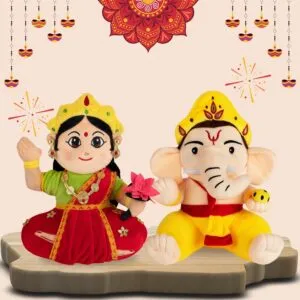
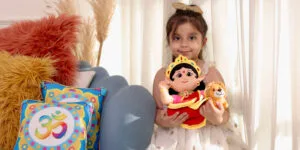
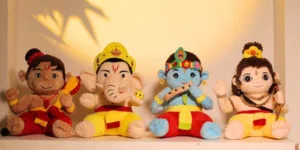
If you would like a little help, My First Book of Mantras is a press-to-play sound book with 25 mantras and the complete Hanuman Chalisa, with a volume slider for quiet moments. Our mantra chanting plush toys play their deity’s mantras when you press the tummy, so children can hear Om Namah Shivaya from Baby Shiva or the Hare Krishna Maha-mantra from Baby Krishna, and sing along.