Why We Worship Lakshmi and Ganesha on Diwali
9 October 2025
If Diwali celebrates Lord Rama’s return to Ayodhya, why is the main puja on Diwali night for Devi Lakshmi and Lord Ganesha, and not for Rama? It is a question many children ask, and a lovely one to answer together. The story takes us back through two great ages, Satya Yuga and Treta Yuga.
Diwali: more than lights
Diwali is the festival of lights. Homes glow with diyas, families share sweets and the whole house feels happy, whether you are in Delhi, Dallas or Dubai. Behind the celebration are two stories that come together on the same night.
Devi Lakshmi appears in Satya Yuga
Long ago, in Satya Yuga, the devas and asuras churned the great ocean (the Samudra Manthan) in search of amrita, the nectar of immortality. Many treasures rose from the waves, and among them came Devi Lakshmi. Tradition holds that she appeared on Kartik Amavasya, the new-moon night of the month of Kartik. That is why Lakshmi Puja is performed on Diwali night, to welcome her blessings of abundance and harmony into the home.
Lord Rama comes home in Treta Yuga
In Treta Yuga, Lord Rama returned to Ayodhya after fourteen years in exile. The people lit rows of lamps to welcome him home, which gave the festival its name: Deepawali, a row of lights.
So Diwali has two roots:
- Lakshmi Puja, from Satya Yuga
- Deepawali, the welcoming lamps, from Treta Yuga
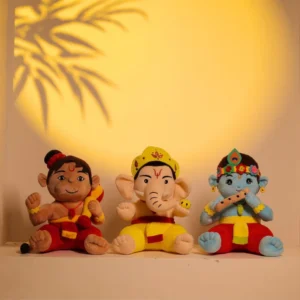
Children love acting out the homecoming. Our Baby Rama and Baby Hanuman plush pair lets little ones play out the journey back to Ayodhya, from Hanuman’s leap to the lamps lighting up the city.
Why Lakshmi and Ganesha together?
One popular legend says that after Devi Lakshmi became the goddess of wealth, she asked Kubera to look after her treasures. But Kubera kept the wealth to himself instead of sharing it. Concerned, Lord Vishnu advised Lakshmi to seek the wisdom of Lord Ganesha.
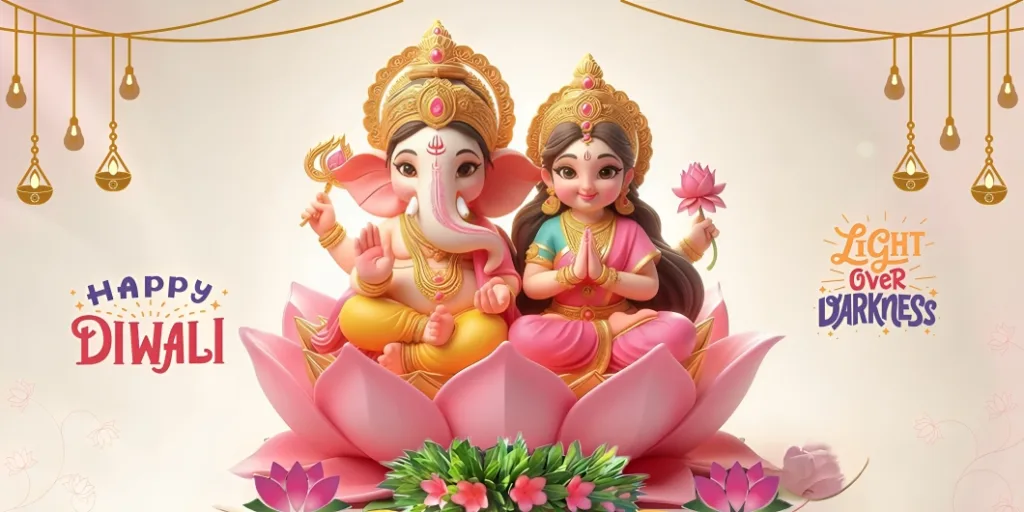
Ganesha agreed to help, making sure that Lakshmi’s blessings reached the people who truly needed them. Since then, Lakshmi has stood for abundance, and Ganesha for wisdom and fairness. They are worshipped together for prosperity with purpose. And because Ganesha is always worshipped first, he takes his place beside her on the altar.
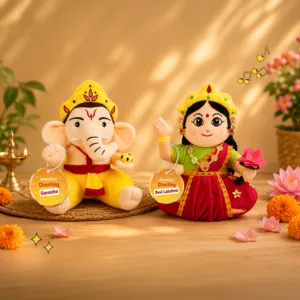
For little ones, our Baby Ganesha and Devi Lakshmi pair brings the two of them into a child’s hands, each plush chanting its own mantras when pressed.
A season of divine rhythms
Diwali also sits within a larger cycle of festivals:
- Between Sharad Purnima and Kartik Amavasya, Devi Lakshmi is said to visit the Earth, with Lord Ganesha at her side.
- During this time Lord Vishnu rests in yoga-nidra, his cosmic sleep, waking soon after on Dev Uthani Ekadashi.
It is a reminder that Diwali is part of a much bigger story, not just a single night.
Celebrating with meaning
Today Diwali can feel like lights and presents. Its deeper message is a lovely one to share with children:
- Abundance needs wisdom.
- Good things are meant to be shared, not hoarded.
- Light wins over darkness, inside us and around us.
This Diwali, tell the story of the churning ocean at bedtime, let your child help place a diya (well supervised) and set a small Devi Lakshmi beside the family puja. Looking for more ideas? See our Diwali gift guide for families abroad.
When culture meets play, the meaning of a festival stays with children long after the last diya has gone out.