Choosing Soft Toys for Kids: A Guide for Families Abroad
4 June 2025
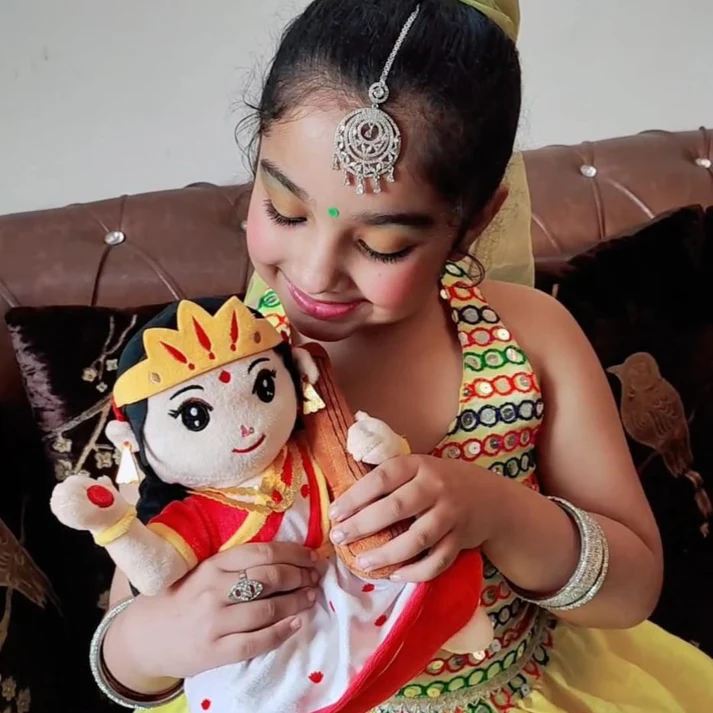
Soft toys have come a long way from the standard teddy bear. Today you can find plush food characters, collectible series, folk-art animals and plush versions of the gods and heroes many of us grew up with. For Indian families living abroad, and for anyone shopping for a child of Indian heritage, there is now a real choice of soft toys that reflect where a child comes from.
But soft toys are not all made equally. Fabric, stitching, stuffing and safety testing vary widely, and buying online for a young child means looking a little more closely. Here is what to check.
Why soft toys remain such a popular gift
- They are one of the most widely given gifts for babies and young children.
- They offer comfort and companionship that hard toys rarely do.
- They need no assembly, and many need no batteries or screens.
- A well-chosen plush often becomes a comfort object a child keeps for years.
- Cultural plush toys carry a story, which makes them especially meaningful from grandparents or relatives far away.
What makes a quality soft toy
1. Safe materials
- Look for clearly described fabrics, such as polyester plush or cotton.
- Avoid toys with a chemical smell or no material information.
- The fabric should feel smooth and even, not rough or shedding.
2. Stitching and construction
- Double-stitched seams last longer and keep stuffing inside.
- Eyes, noses and accessories should be firmly attached or embroidered.
- Avoid loose decorative parts for children under three.
- Give the toy a gentle squeeze at the seams and joints when it arrives.
3. Age-appropriate design
- Toys for babies need no small parts, no hard pieces and a safe size.
- Toddler plush can have more features but nothing fragile or small enough to swallow.
- Read the age label, then look at the design yourself too.
4. Cleaning
- Check the care label before you buy.
- Plain plush is often machine washable; toys with a sound box or electronics usually need surface cleaning instead.
5. Safety certification
- ASTM F963 (USA) and EN-71 (Europe) are widely recognised toy-safety standards. In the UK, look for the UKCA or CE mark; in Australia, toys must meet the mandatory standards for children’s products.
- Trustworthy sellers show certification details on the listing or packaging.
Cultural plush: soft toys with a story
- More makers now create plush inspired by Indian stories, deities and festivals.
- Folk-art designs and animals native to India are popular with collectors and families alike.
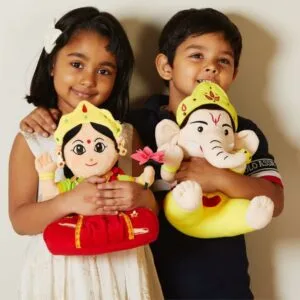
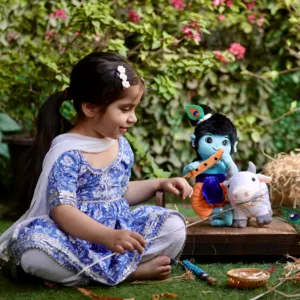
- Plush deities and story characters give children a familiar face from bedtime stories and festival days.
- For children growing up abroad, they are a gentle, everyday reminder of their roots, and a natural way to start conversations about family traditions.
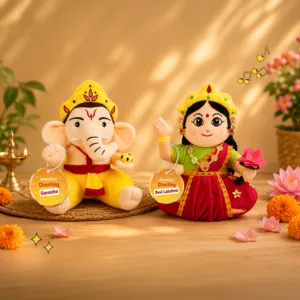
Our own range includes Ganesha, Krishna and Hanuman plush that chant mantras when you press the tummy, as well as non-musical deity duos such as Rama and Sita.
Soft toys by age: a rough guide
| Age | What children often enjoy | Soft toy type | What to avoid |
|---|---|---|---|
| 0–3 months | Looking at faces and contrast, hearing gentle sounds | High-contrast cloth toy, soft rattle (for supervised play only) | Small parts, hard pieces, loud sounds |
| 3–6 months | Grasping, mouthing, tummy time | Soft teether, crinkle toy | Heavy or large toys, battery toys |
| 6–12 months | Squeezing, exploring, early attachment | Small character plush, squeeze toy | Fragile decorations, loose accessories |
| 1–3 years | Pretend play and stories | Character plush and sets | Easily torn fabric, tiny accessories |
| 3–5 years | Role play, storytelling, collecting | Story and festival characters, plush sets | Anything outside the labelled age range |
For babies under one, keep all soft toys out of the sleep space and use them during supervised awake time.
Buying online from abroad: what to check
Size
Photos can mislead. Check the measurements and compare them with something familiar. For reference, our small plush are about 23 cm and our medium plush about 28 cm.
Reviews
Look for comments on stitching, stuffing and how the toy holds up after washing. Mentions of shedding, loose parts or a chemical smell are warning signs.
Delivery time
If a toy is shipping internationally for a birthday or festival, check the delivery estimate and order early. We ship from India within 24 hours; delivery takes about 8–12 days to the USA, Canada and Europe, 7–10 days to the UK, Singapore and the UAE, and 15–20 days to Australia.
Damage and returns
Read the policy before you buy. If anything from us arrives damaged, we replace it or refund it.
Choose quality over quantity
The right soft toy is the one a child actually loves and keeps. One well-made plush that survives years of hugs is worth more than a pile of cheaper toys that sag or break within months. And if it carries a story your child can grow up with, even better. Browse our plush deities, or read 7 things to check before buying a soft toy.
Frequently asked questions
Are soft toys safe for newborns?
Soft toys made for newborns, with no small parts and safe materials, can be used during supervised play. Keep all soft toys out of the cot or crib while a baby sleeps.
How can I tell if a soft toy is safe for my child?
Check the age label, look for recognised safety standards such as ASTM F963 or EN-71, make sure there are no detachable small parts, and read the care instructions.
Can I buy Indian cultural soft toys outside India?
Yes. A growing number of makers ship internationally, including Panda’s Box, which ships plush deities and story characters from India to most countries.
How should I clean a plush toy?
Follow the care label. Plain plush can often be hand or machine washed gently; toys with a sound box should be surface-wiped with a damp cloth. Let the toy dry completely before giving it back.